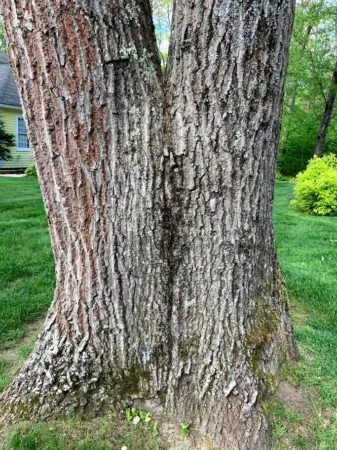
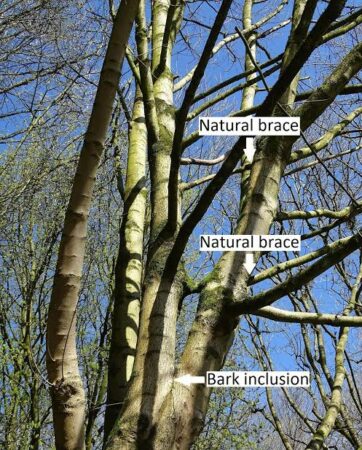
Inclusion bark (also called included bark) forms when two branches—or two main stems—grow so tightly together that bark gets trapped between them. Instead of a strong, unified branch union, the tree develops a weak, V-shaped connection where the wood can’t fuse properly. Over time, this becomes one of the most common points of limb failure in trees.
Why Inclusion Bark Happens
Several growth patterns can lead to included bark:
-
Tight V-Shaped Branch Angles Branches that grow upward at a narrow angle press against each other, forcing bark inward instead of allowing strong wood fiber to form.
-
Co-Dominant Stems When a tree grows two main stems of similar size, they compete for sunlight and space. As they expand, they squeeze together and trap bark between them.
-
Fast, Dense Growth Species like maples, pears, crabapples, and willows grow quickly and often develop poor union structure simply due to rapid expansion.
-
Natural Genetics Some trees are just more prone to forming included bark based on their growth habits.
Why It’s a Problem
Inclusion bark creates a structurally weak point because the area is held together by bark instead of solid wood. This often leads to:
-
Splitting during storms or heavy winds
-
Cracks forming deep into the trunk
-
Sudden branch or stem failure
-
Increased risk of property damage or injury
Weak unions almost always worsen as the tree grows heavier.
How to Recognize It
Common signs include:
-
A sharp, tight V-shaped junction
-
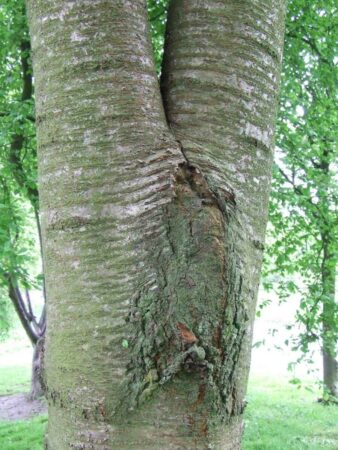
A visible seam or line running down the union
-
Bark bulging or folding inward
-
Two branches appearing to push against each other
How to Fix or Prevent Inclusion Bark
-
Pruning (Best on Young Trees) Removing or reducing one of the competing branches early encourages a single strong leader and prevents the issue from forming in the first place.
-
Cabling & Bracing For mature trees that you want to preserve, steel support systems can stabilize weak unions and reduce the chance of splitting.
-
Selective Stem Removal Sometimes removing one co-dominant stem is the safest long-term option, especially if weight and pressure are causing stress.
-
Full Tree Removal (Severe Cases) If the union is extremely compromised—especially near structures or walkways—removal may be necessary for safety.
-
Regular Maintenance Annual inspections and proper structural pruning dramatically reduce the risk of inclusion bark developing.
If you find yourself needing help with inclusion bark or other tree concerns, we’re here to assist.
Methods of reaching our office: Phone: (540) 720-8733 Email: office@treetimesinc.com Address: 1193 Richmond Hwy, Fredericksburg VA 22405